WAIC 2026: 60 Humanoid Robots Go On Duty as Industry Reaches Inflection Point
The 2026 World Artificial Intelligence Conference in Shanghai became a watershed moment for humanoid robotics, with 60 robots deployed across the venue for real working shifts — serving coffee, guiding visitors, and performing live demonstrations — as Unitree, Agibot, and UBTECH unveiled flagship next-gen platforms.

The 2026 World Artificial Intelligence Conference (WAIC), held July 17-20 at the Shanghai World Expo Exhibition and Convention Center, marked a historic turning point for the humanoid robotics industry. For the first time, 60 humanoid robots from over a dozen companies were deployed across the venue in real working shifts — not as static displays, but as functioning staff serving coffee, guiding visitors, delivering materials, and performing live assembly demonstrations on purpose-built production lines.
Unitree Robotics stole the spotlight with the unveiling of the GD01, a transformable piloted mecha suit that blurs the line between wearable exoskeleton and autonomous humanoid. Standing 3.2 meters tall in full mecha mode, the GD01 can operate autonomously or be driven by a human pilot for heavy industrial tasks. The company also demonstrated its G1 robot performing live surgical-assistance demonstrations, building on its landmark Nature-published laparoscopic surgery breakthrough earlier in the year.
Agibot (Zhiyuan Robot) revealed the A3 Ultra, its most advanced humanoid platform to date, featuring a new bimanual dexterous manipulation system with 28 degrees of freedom across both hands and a next-generation vision-language-action model that enables real-time task planning. The company announced that its 15,000th robot had rolled off the production line during the conference, with the companion Lingjing G2 dexterous hand achieving a 99.99% yield rate in mass production.
UBTECH previewed its upcoming U1 humanoid platform and announced that cumulative orders had surpassed 13,000 units, with deployments spanning automotive manufacturing, logistics, and education. The company signed strategic partnerships with three Fortune 500 automotive companies during the event, committing to deploy 500 Walker S series robots on assembly lines by year-end.
Industry analysts at the conference noted that WAIC 2026 represented an inflection point: the transition from 'demonstration robots' to 'working robots.' Goldman Sachs revised its 2026 global humanoid shipment forecast upward to 50,000 units, while China's MIIT reaffirmed its projection that domestic humanoid robot production would exceed 100,000 units in 2026. The conference closed with a joint declaration from 20 leading companies to establish interoperability standards for humanoid robot software and hardware platforms.
This is the first time humanoid robots have worked real shifts at a major event. We've moved from showing what robots can do to showing what robots do — every day, on the job.
— Wang Xingxing, Founder of Unitree Robotics
Related Robot
Unitree G1
Unitree Robotics
Related News
 IFA Berlin / AI2Work
IFA Berlin Stages First Robot Catwalk in 102-Year History
On September 5, 2026, IFA Berlin staged 'Robots on the Runway' — the first robot fashion catwalk in the show's 102-year history. Eleven humanoid robotics exhibitors including Unitree, AgiBot, DEEP Robotics, EngineAI and AiMOGA walked a purpose-built T-stage at the Creator Stage. Chinese firms accounted for 932 of IFA's 1,900+ exhibiting brands, nearly half the show, marking physical AI as the headline act.
 Xinhua / Timeout Riyadh
Chinese Robots Steal the Show at LEAP 2026 in Saudi Arabia
At LEAP 2026 in Riyadh (Aug 31 – Sep 3), Chinese robotics firms became the crowd favorites. Unitree's humanoid boxing ring drew the largest crowds, AGIBOT's ridable quadruped drew queues, and HONOR's robot phone made its overseas debut. Meanwhile, Hero Esports announced CyberHero x Riyadh — the Middle East's first humanoid robot kickboxing event — for September 9, 2026.
 Channel News Asia / Xinhua
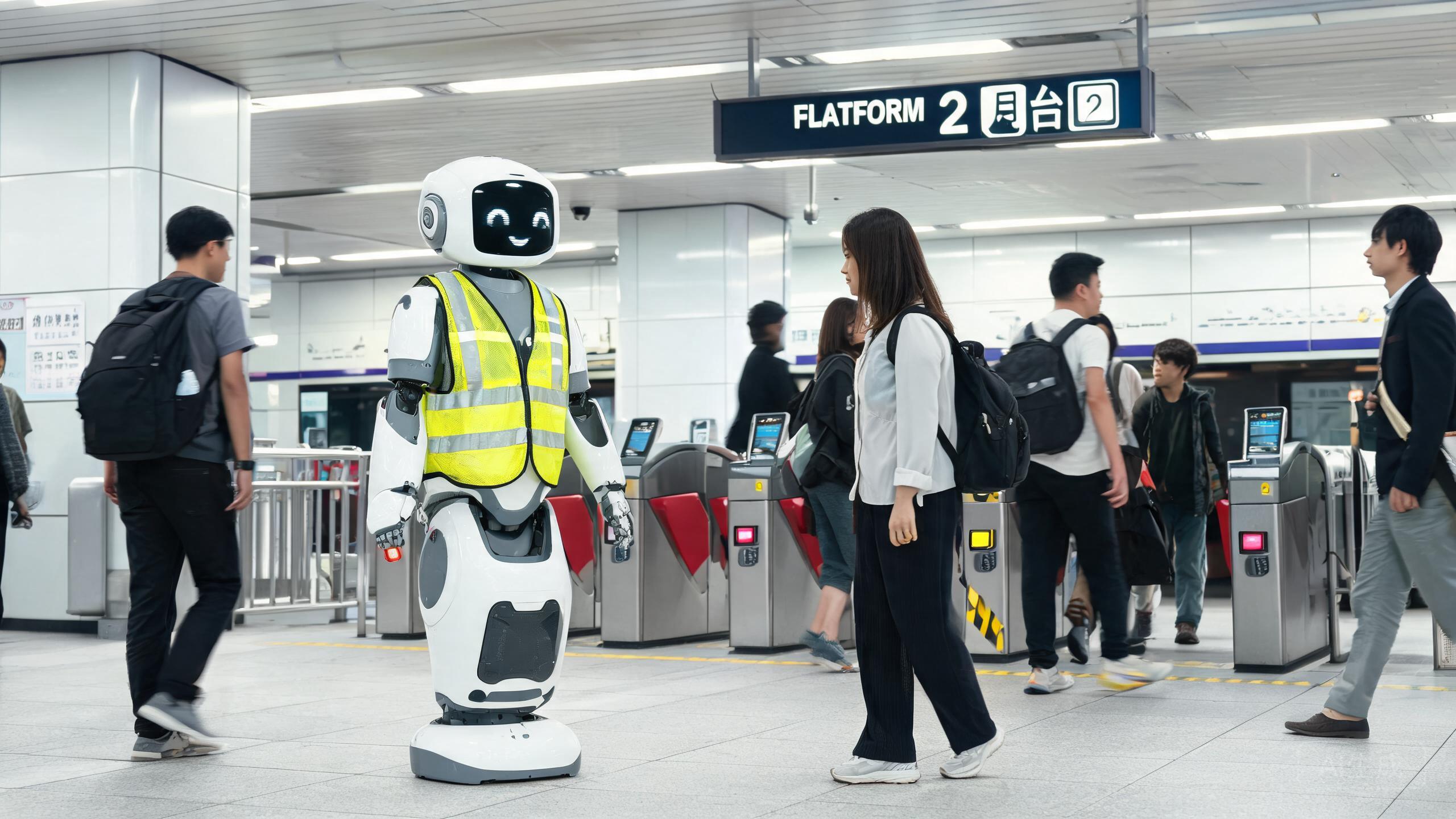
Singapore Trials Humanoid Robot 'Olly' at Little India MRT Station
Singapore's Land Transport Authority deployed a 1.27m humanoid robot named 'Olly' — developed by Unitree Robotics — at Little India MRT station for a two-week trial from August 31 to September 11, 2026. Olly answers passenger queries and guides commuters to exits, with mixed but encouraging results on direction accuracy and voice recognition in a noisy transit environment.